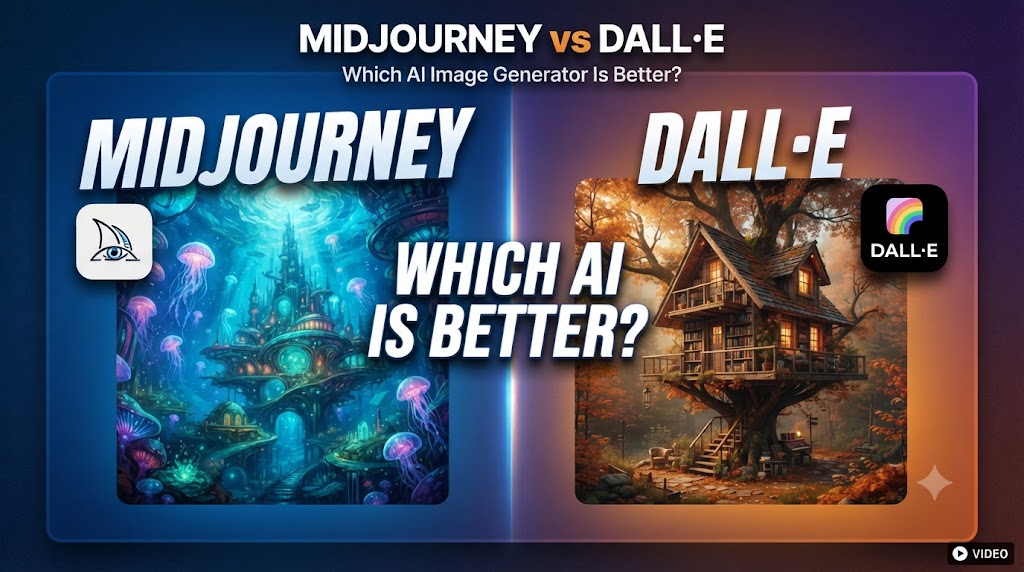
Midjourney vs DALL·E
AI image generators have changed how people create illustrations, marketing visuals, concept art, social media graphics, and other digital content. Two well-known names in this area are Midjourney and DALL·E.
A Midjourney vs DALL·E comparison is useful because the two tools have followed different approaches to AI image creation. Midjourney focuses strongly on visual creativity, aesthetics, personalization, and image-generation controls. DALL·E, meanwhile, became known for generating images from natural-language descriptions and for capabilities such as image editing and variations. However, OpenAI has now moved its current image-generation experience toward newer GPT Image and ChatGPT Images systems, so DALL·E is no longer the main image-generation experience in ChatGPT. (OpenAI)
Quick Comparison Table
| Feature | Midjourney | DALL·E |
|---|---|---|
| Main strength | Artistic and highly stylized image creation | Natural-language image generation |
| Current status | Actively developed with V8.2 | Older OpenAI image-generation product |
| Prompt-based generation | Yes | Yes |
| Image editing | Yes | Yes, depending on the supported OpenAI experience |
| Personalization | Strong personalization features | More focused on instruction-based generation |
| Style controls | Extensive | More conversational |
| Web experience | Dedicated Create platform | DALL·E has been superseded in ChatGPT |
| Commercial use | Subject to Midjourney terms and plan | Subject to OpenAI terms for the applicable service |
| Best suited to | Creative visuals, artwork, concepts and stylized designs | Natural-language image creation and OpenAI’s image-generation ecosystem |
Midjourney vs DALL·E: How Do They Work?
How Midjourney Works
Midjourney lets users describe an image using a text prompt. Its current V8.2 model provides controls for aspects such as stylization, weirdness, variety, personalization, aspect ratio, and image editing. (Midjourney)
The platform also supports image prompts and style references. This gives users more ways to guide the visual direction of a generated image. (Midjourney)
Midjourney’s approach is particularly useful when the visual style itself is an important part of the project.
How DALL·E Works
DALL·E was originally developed by OpenAI to generate images from natural-language descriptions. Earlier versions supported capabilities such as creating images from text, modifying existing images, and generating variations. (OpenAI)
However, the product landscape has changed. OpenAI says the official DALL·E GPT has been retired from ChatGPT, with users directed toward the newer ChatGPT Images experience. OpenAI also says its newer GPT Image API is the current direction for programmatic image generation, while DALL·E 3 is marked as deprecated. (OpenAI Help Center)
This distinction is important when comparing the two tools today.
Midjourney vs DALL·E for Image Quality
Midjourney is designed around visual quality, aesthetics, and creative control. Its V8.2 release focuses on aesthetics, image quality, and personalization. (Midjourney)
It also provides options such as stylization and variety, allowing users to influence how artistic or diverse the results should be. (Midjourney)
DALL·E became widely recognized for turning natural-language descriptions into images and combining different concepts within an image. (OpenAI)
For users who specifically want the current OpenAI image-generation experience, however, it is more accurate to look at ChatGPT Images or GPT Image rather than treating older DALL·E versions as OpenAI’s latest image model. (OpenAI Help Center)
Midjourney vs DALL·E for Prompt Understanding
Both systems are based on text instructions, but the user experience is different.
Midjourney provides many prompt parameters and visual controls. Users can adjust settings such as aspect ratio, stylization, personalization, image weight, style references, and other options. (Midjourney)
This gives experienced users more control over the final visual direction.
DALL·E was designed around natural-language instructions. Its original system demonstrated the ability to understand descriptions involving multiple concepts and relationships between objects. (OpenAI)
For beginners, a conversational approach can be easier because the user can describe the desired image without learning many technical parameters.
Midjourney vs DALL·E for Creative Styles
This is one of the major differences between the two approaches.
Midjourney offers dedicated controls for stylization, personalization, style references, and visual experimentation. Its Personalization features can learn a user’s preferred aesthetic, while style references can help guide the appearance of generated images. (Midjourney)
That makes Midjourney useful for projects where a distinctive visual identity matters.
DALL·E was designed more around understanding what the user describes and translating that description into an image. Its original capabilities included combining concepts, attributes, and styles in generated images. (OpenAI)
Which Approach Is Easier?
If you want many visual controls and enjoy experimenting with styles, Midjourney provides a deeper set of dedicated controls.
If you prefer describing what you want in ordinary language, OpenAI’s newer conversational image-generation experience can be more straightforward.
Midjourney vs DALL·E for Image Editing
Midjourney has continued expanding its editing capabilities. Its current documentation describes an Edit Model that can create and modify images using written instructions and reference images. (Midjourney)
Midjourney also supports tools such as variations and other methods for refining creations. (Midjourney)
DALL·E also introduced image-editing capabilities in earlier generations, including the ability to regenerate selected areas of an existing image. (OpenAI)
For current OpenAI users, however, image editing is now handled through the newer ChatGPT Images experience rather than the retired DALL·E GPT. (OpenAI Help Center)
Midjourney vs DALL·E for Beginners
Midjourney can be used through its web-based Create experience. Users enter a prompt into the Imagine bar and can then refine the generated images. (Midjourney)
However, Midjourney exposes many controls, which can take some time to understand.
OpenAI’s conversational image-generation approach can feel simpler because users can describe an image in natural language and interact with the system conversationally.
Therefore, the easier option depends on how you prefer to work.
Midjourney vs DALL·E for Professional Use
Midjourney provides subscription plans ranging from Basic to Mega. Its current plans include different amounts of Fast GPU time, with Relax Mode available for unlimited image generation on Standard and higher plans. Stealth Mode is available on Pro and Mega plans. (Midjourney)
Commercial and usage rights depend on the applicable terms and subscription conditions. Midjourney’s terms also specify additional requirements for companies above certain revenue levels. (Midjourney)
For OpenAI, commercial and usage conditions depend on the particular current product or API being used. Because DALL·E 3 is now marked as deprecated, users planning a new professional workflow should check the terms for the current OpenAI image-generation product rather than relying on older DALL·E information. (OpenAI Help Center)
Midjourney vs DALL·E: Pricing
Midjourney currently offers four subscription levels: Basic, Standard, Pro, and Mega. Its published monthly prices are $10, $30, $60, and $120 respectively, while annual billing provides a 20% discount according to Midjourney’s current plan information. (Midjourney)
DALL·E pricing is more complicated today because the standalone DALL·E experience is no longer the main OpenAI image-generation product. OpenAI now directs ChatGPT users to ChatGPT Images and developers toward its newer GPT Image API. (OpenAI Help Center)
For this reason, comparing the old DALL·E pricing directly with current Midjourney subscriptions can be misleading.
Which One Should You Choose?
Choose Midjourney If:
- You want highly stylized and artistic visuals.
- You want extensive visual controls.
- You want personalization and style-reference features.
- You regularly create concept art, illustrations, creative graphics, or visual experiments.
- You want a dedicated image-generation platform.
Consider OpenAI’s Current Image Tools If:
- You prefer describing images conversationally.
- You already work inside the ChatGPT ecosystem.
- You want image creation and editing within a conversational workflow.
- You are developing an application and need a current OpenAI image-generation API.
- You specifically need features offered by the newer GPT Image or ChatGPT Images systems.
Midjourney vs DALL·E: Which AI Image Generator Is Better?
There is no single choice that fits every image-generation task.
Midjourney is focused strongly on creative image generation, aesthetics, personalization, and visual controls. Its current V8.2 system and editing tools make it a dedicated platform for people who want greater control over the visual style of their creations. (Midjourney)
DALL·E, meanwhile, is now better understood as an earlier generation of OpenAI’s image-generation technology. OpenAI has moved its current image-generation experience toward ChatGPT Images and GPT Image, while DALL·E 3 is marked as deprecated for API use. (OpenAI Help Center)
So, for someone comparing the current tools available today, it is important not to treat DALL·E as equivalent to OpenAI’s latest image-generation technology.
Conclusion
Midjourney and DALL·E helped shape the AI image-generation space, but their current positions are different.
Midjourney remains an actively developed image-generation platform with strong creative controls, personalization, style references, and editing features. (Midjourney)
DALL·E was an important OpenAI image-generation system, but OpenAI has moved its current image-generation experience to newer technologies. Therefore, anyone making a new comparison should consider whether they actually want to compare Midjourney with OpenAI’s current ChatGPT Images or GPT Image technology instead.
Disclaimer
AI image-generation features, models, pricing, plans, availability, usage rights, and service policies can change over time. The information in this comparison is based on the currently available official information and may change after publication. Always check the official service documentation and terms before making a purchase or using generated images for commercial purposes.